Why did Liverpool win the Premier League?
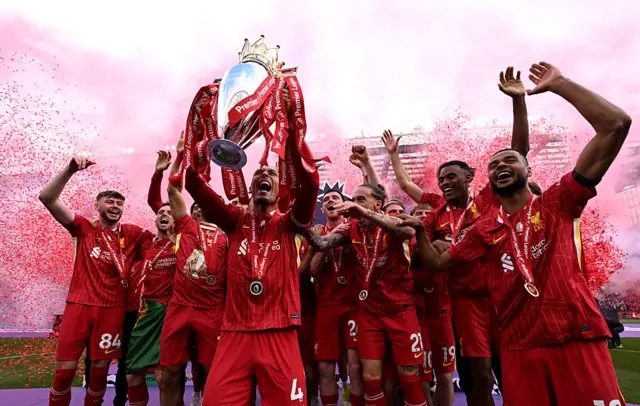
Liverpool were crowned Premier League champions in May 2025, in new manager Arne Slot’s first season as the reds boss. Football fans will tell you they won the title because they were the best team in the league and played the best football, which of course is true, but there is much more to it than that. Data can paint a detailed picture of the reasons for success and failure, better helping to understand just how it happened.
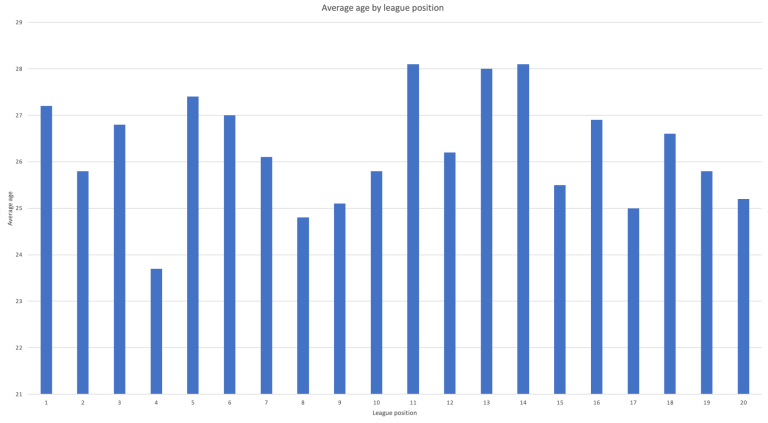
It is often believed that experience is the key to success in football, with data from the CIES Sports Laboratory finding the median age of champions across Europe’s top five leagues between 2009 and 2017 was approximately 26.5 years old. During last season, Liverpool had the 5th oldest squad in the Premier League with an average age of 27.2. Despite not having the outright oldest squad in the league, it does show that there is a correlation between experience and success.
Fine margins are perhaps what define football so much today, with just one goal over the course of the season potentially leading to continental qualification, winning the title or relegation. Penalties are just one facet that can contribute to these fine margins, and Liverpool converted the most in the league last season. The average total of penalties scored throughout the Premier League season was 3.45, but Liverpool scored 9, blowing the average out of the water.
Historically, teams that are successful have a core group of players that have been at the same club for a similar amount of time. Despite the arrival of a new manager in the summer of 2024, which usually leads to inflated investment to accommodate transfers, the club only had one arrival during that transfer window (Federico Chiesa). This figure was the lowest in the league, with the Merseyside club also being joint 2nd in least departures from the last season. The squad was essentially identical from the previous season, highlighting the demand for a settled group to have success.
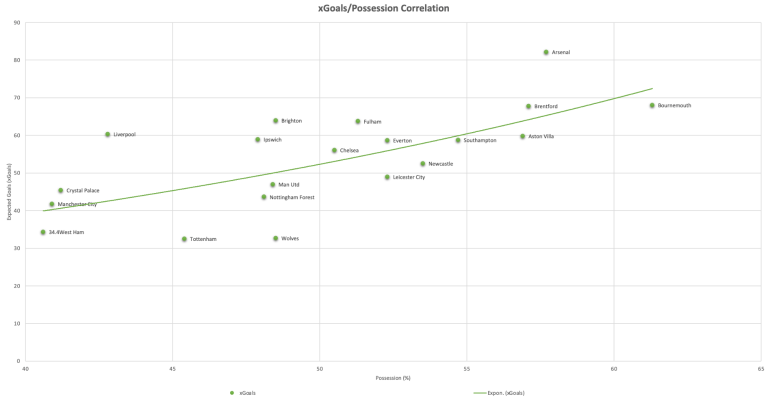
A possession-based style of football has become increasingly prevalent in recent years. Pep Guardiola, who originally inherited his style off the great Johan Cruyff, often referred to as the father of football, has experienced amazing success with his approach to football. Intricate tactics now dominate football, with the previous manager of Liverpool, Jürgen Klopp, adopting a rather contrasting style to Pep that involved high pressing and stretching the play using counter attacks. Arne Slot adopted a calmer and more controlled style last season, with a larger emphasis on retaining possession throughout phases of the game. Winning the Premier League last season, this highlighted that possession is vital to success, as Klopp’s similar team in the previous years did not achieve that kind of success so effectively.
Expected goals (xG) has come around only in the last few years, which assigns a probability, between 0 and 1, to every shot, indicating how likely it is to be a goal based on factors like distance, angle, and whether it was a big chance or a one-on-one situation. Rather than just analysing the amount of goals Liverpool scored, using xG takes out the striker error element. A combination of xG and possession highlights how effective a team is, painting a picture of what makes a team click.
Liverpool ultimately achieved success through a solid base built by Jürgen Klopp over the 9 years he was at the club, but also due to the differing approach Slot adopted that utilised the players in the squad more effectively. They also had experienced players, such as Virgil Van Dijk, Mo Salah, Andrew Robertson, Trent Alexander-Arnold and Alisson Becker, who had all experienced domestic and continental success at the club under the previous manager. However, credit should not be taken away from Slot, as his adaptation to the league occurred much more expeditiously than other managers usually do.
By Finn Littlewood | 19th November 2025
What does a semi-professional footballer do if they experience a severe injury?
Major injuries are unfortunately a large part of a footballer’s career at any level; however, the spotlight is usually shone on those at a high level. The Premier League is notorious for being the most physical league in the world, and the number of injuries per season is ever increasing.
There were 655 ‘time-loss’ injuries over the course of the 2023-2024 season, with an 11% rise on the previous season. Perhaps the most severe and known type of injury is an anterior cruciate ligament (ACL) tear, with the average of 7 ACL injuries in the 2013/2014 rising to a total of 11 in the 2024/2025 season.
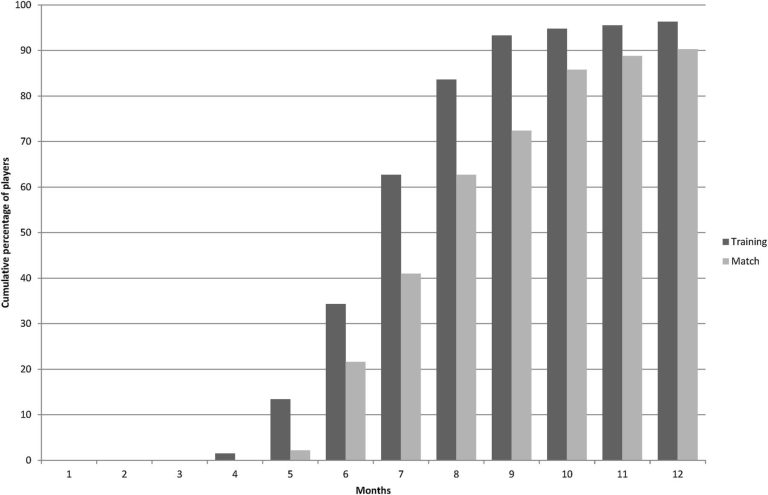
Stats show that ACL injuries are more likely to occur in training rather than matches, potentially due to the volume of football being played during training, as opposed to matches.
In terms of support provided for players who have experienced a major injury, most in the Premier League and the EFL have medical coverage for any injuries included in their contracts. The Professional Footballers’ Association (PFA) and other players unions play a large role in ensuring pro footballers are given the sufficient support after a severe injury.
Semi-professional footballers do not receive the same level of support, as being outside of the EFL they are not covered by the major player unions. Unlike professional clubs, most semi-pro teams do not have the substantial financial resources to cover medical fees.
Another obstacle these teams face is that most semi-pro players have other jobs, and injuries can result in potential loss of earnings if they are unable to work their primary jobs. The incidence of ACL injuries in semi-professional football is approximately 0.043 per 1000 hours of football exposure, which is a higher rate than in professional football (0.058/1000 hours).
Chorley F.C. midfielder George Horbury, who sustained an ACL injury on the 25th August in a National League North game against Kings Lynn Town, sat down with me recently to discuss his injury, his rehabilitation process and the support he has been given by the club.
When asked about the support he received following his injury, Horbury said: “Chorley got me a scan 48 hours after my injury. They then booked me follow up consulting to see specialists.”
“They did not pay for my surgery though; it was nine grand which is a lot of money especially for non-league clubs.”
When asked about how long he had to wait for surgery, he said: “I ended up waiting about 6 weeks because I was waiting for funding, and they were still determining whether I had definitely torn my ACL.”
When asked about when he hopes to be back playing, he said: “Recover is advised to be at least 9 months, but some people take a year off. I am hoping to be back for the start of next pre-season. My recovery will be a bit quicker because I didn’t need my meniscus treating, meaning rehab will go a lot smoother.”
Andy Preece, the Chorley manager, said in response to a question regarding Horbury’s injury: “It’s a shame but we will look after him, we’ll make sure he gets the right treatment and comes back stronger.”
The fact that Horbury is only 21 potentially played a part in the club’s decision to fully support him throughout his injury, especially with him being a crucial part of the squad last season.
Injuries will always be a part of the game we all love, but medical technologies are always improving to ensure shorter recovery times, less frequent reoccurrence of injuries and rehabilitation.
By Finn Littlewood | 18th November 2025